
Smart product scanner abroad: understand the product, not only the words
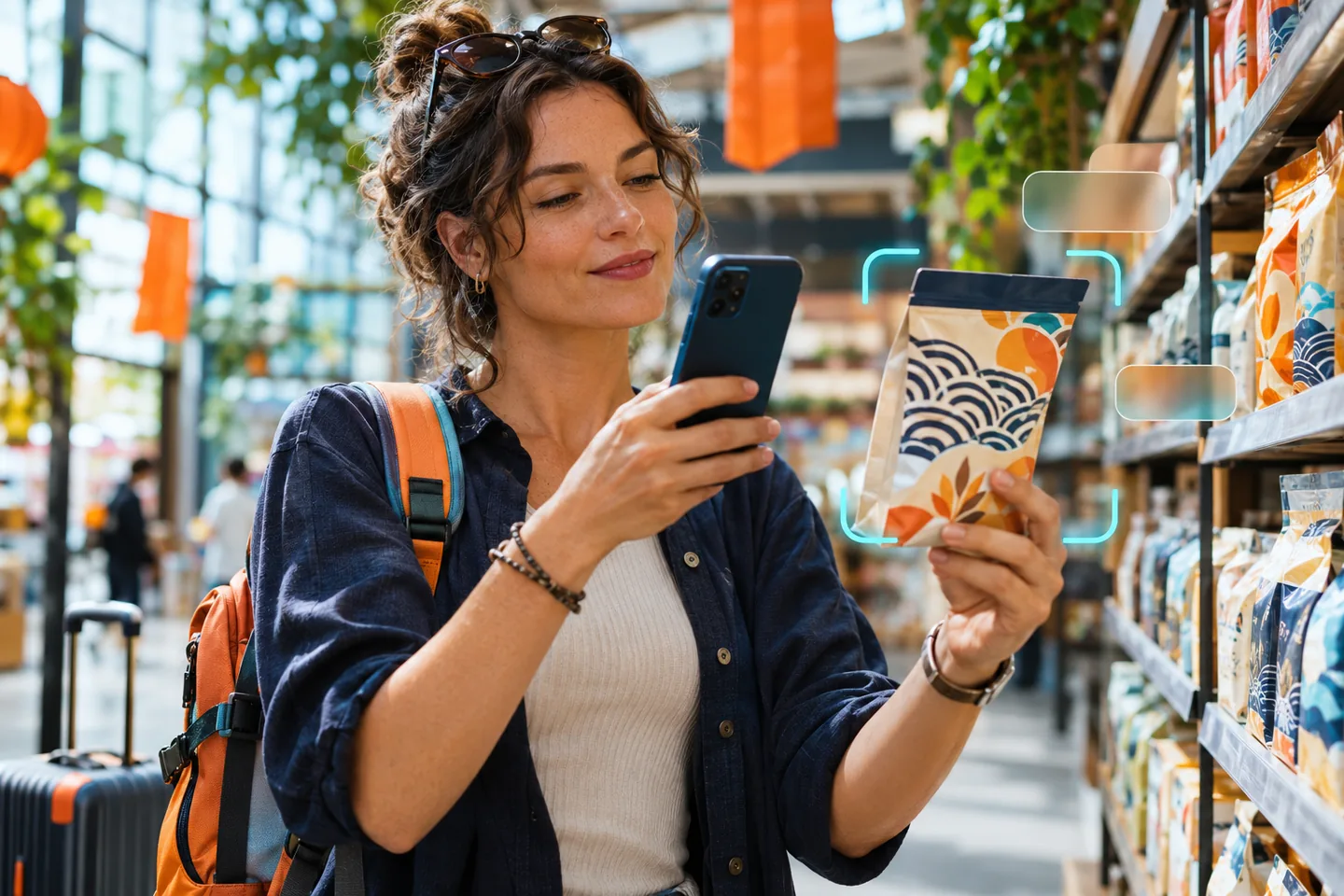
A foreign package may show a familiar picture while the ingredients, preparation, warnings and intended use remain unclear. IndieTranslate helps turn an image of the label into an explanation in your language so you can understand what the product is and which details deserve attention.
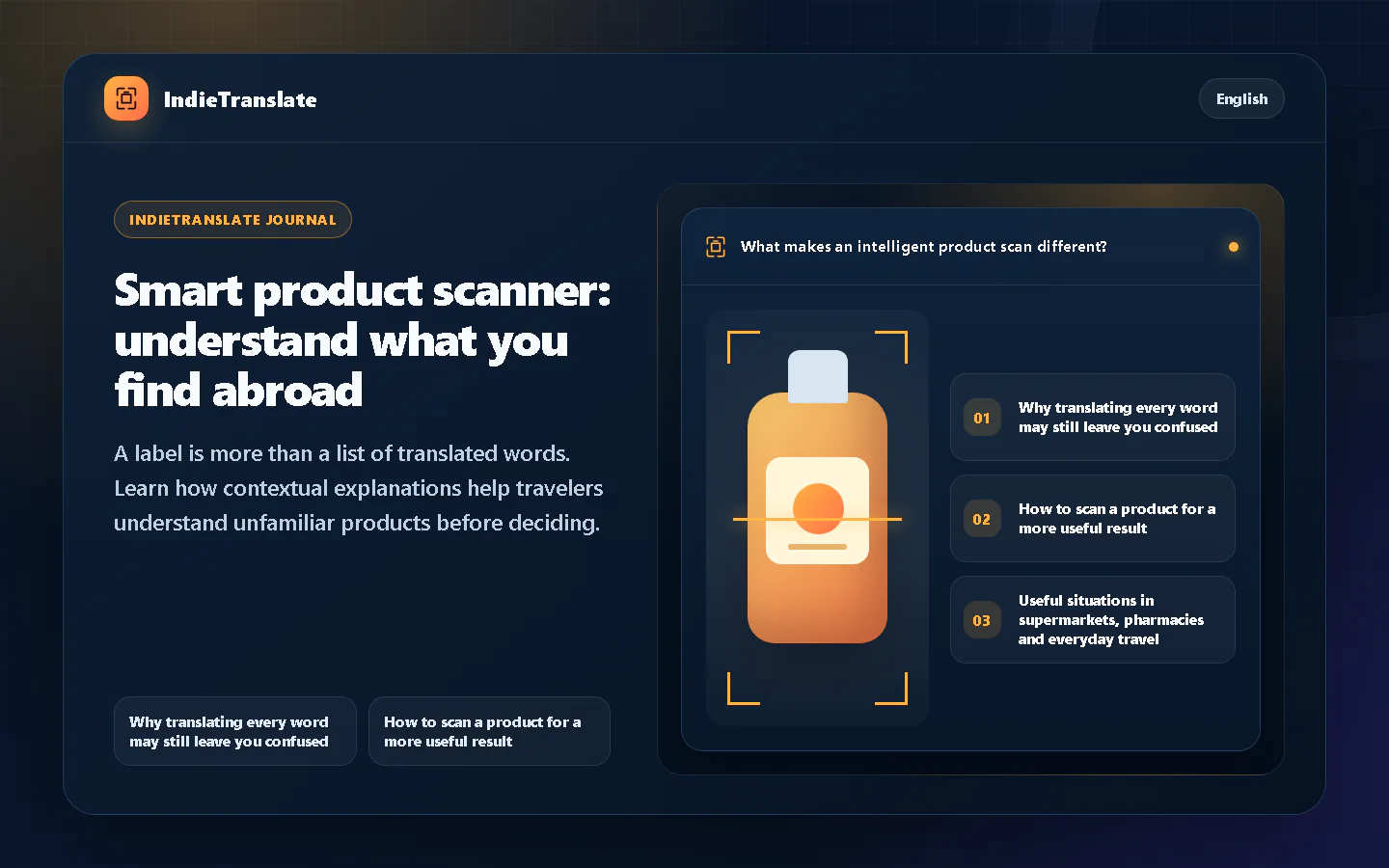
What makes an intelligent product scan different?
A generic image translator extracts and replaces text. An intelligent scan goes further: it organizes the visible information and explains the likely purpose, use, relevant instructions and warnings in a form that is easier to understand. The physical label remains the final source, especially for health and safety decisions.
Why translating every word may still leave you confused
Packaging is designed for local consumers who already recognize product categories, measurements and common instructions. A literal translation can produce correct words but fail to explain whether an item is a concentrate, a refill, a cosmetic, a cleaning product or something that must be diluted before use.
Context connects those fragments. The brand area, product name, icons, directions and warning panel together indicate how the item is meant to be used. IndieTranslate aims to describe that relationship in plain language rather than presenting an unordered wall of extracted text.
How to scan a product for a more useful result
Photograph the label in good light, keep the camera parallel to the package and make sure the text is in focus. If the front and back contain different information, scan both separately. A clear image gives the system a better chance to identify headings, quantities and instructions.
Then read the explanation alongside the original package. Look for the product category, intended use, preparation, storage and warnings. If a critical detail is hidden, damaged or outside the photo, the scan cannot infer it reliably—capture another image or ask the seller or manufacturer.
- Avoid glare, shadows and fingers covering text.
- Photograph ingredients and warnings at a readable distance.
- Include the measurement unit and expiry area when relevant.
- Use separate photos for densely printed panels.
- Keep the package available while reviewing the explanation.
Useful situations in supermarkets, pharmacies and everyday travel
At a supermarket, the scanner can help distinguish a ready-to-drink beverage from a syrup, or explain preparation directions on a regional food. In a hotel or holiday rental, it can clarify whether a bottle is surface cleaner, laundry product or personal care item. In a cosmetics shop, it can organize directions and visible cautions before you ask an employee for more detail.
The feature is also useful for instructions on household goods, souvenirs, packaged gifts and products received from a local service. Its value is not limited to tourism: immigrants, exchange students and international families can use the same workflow in daily life.
Never rely on an automated scan alone for allergies, medication dosage, dangerous chemicals or urgent safety decisions. Verify the original label and consult a qualified professional.
The details you should always verify yourself
Artificial intelligence can misread small print, stylized fonts or text curved around a container. It may also miss a symbol whose meaning depends on local regulation. Treat the explanation as a practical orientation and compare important facts with the visible label.
For food, verify ingredients, allergen statements, expiry date and storage. For cosmetics, check the intended area of use and warnings. For household products, confirm dilution, ventilation and contact precautions. For medicines, seek a pharmacist or doctor rather than using a general product explanation as medical advice.
- Ingredients and allergen declarations.
- Dosage, dilution or preparation quantities.
- Expiry date and storage temperature.
- Age, pregnancy or medical restrictions.
- Hazard symbols and emergency instructions.
From guessing by the package to making an informed question
The goal is not to make every purchase decision for you. It is to give you enough understanding to ask a better question: “Does this contain peanuts?”, “Is this diluted before use?” or “Is this the version for sensitive skin?” A precise question is easier for a local employee to answer than pointing at a package and hoping.
By combining image understanding, translation and explanation, IndieTranslate makes unfamiliar products less intimidating. You keep control of the decision and gain a clearer starting point in your own language.
Use the scanner as a guide, not an invisible guarantee
A product scan is most useful for orientation, comparison and everyday understanding. It cannot see information outside the image, confirm that a package is authentic or know your personal medical history. Clear boundaries make the tool safer and more helpful.
When the consequences of a mistake are serious, pause and verify. Good technology should help you recognize when you have enough information—and when you need a human expert.
Frequently asked questions
Can IndieTranslate scan any product?
It can analyze readable product images, but results depend on image quality, visible text and the type of package. Some labels, handwriting and reflective surfaces may not be recognized correctly.
Does it only translate the label?
The experience is intended to organize and explain the visible information in context, not merely replace isolated words.
Can I use it to check food allergies?
It may help you understand visible text, but do not rely on automated analysis alone. Confirm the original allergen declaration and ask qualified staff or the manufacturer.
Can the scan replace advice from a pharmacist?
No. Medicines, dosage, interactions and symptoms require a pharmacist, doctor or other qualified health professional.
Understand unfamiliar products before you decide
Use IndieTranslate to turn a clear product photo into a practical explanation in your language—and verify every critical detail on the original label.